
For the biggest shows in the calendar
Everything an in-house app promises — proven, offline-first, and co-branded to your show — without the build cost, the agency relationship, or the annual maintenance burden.
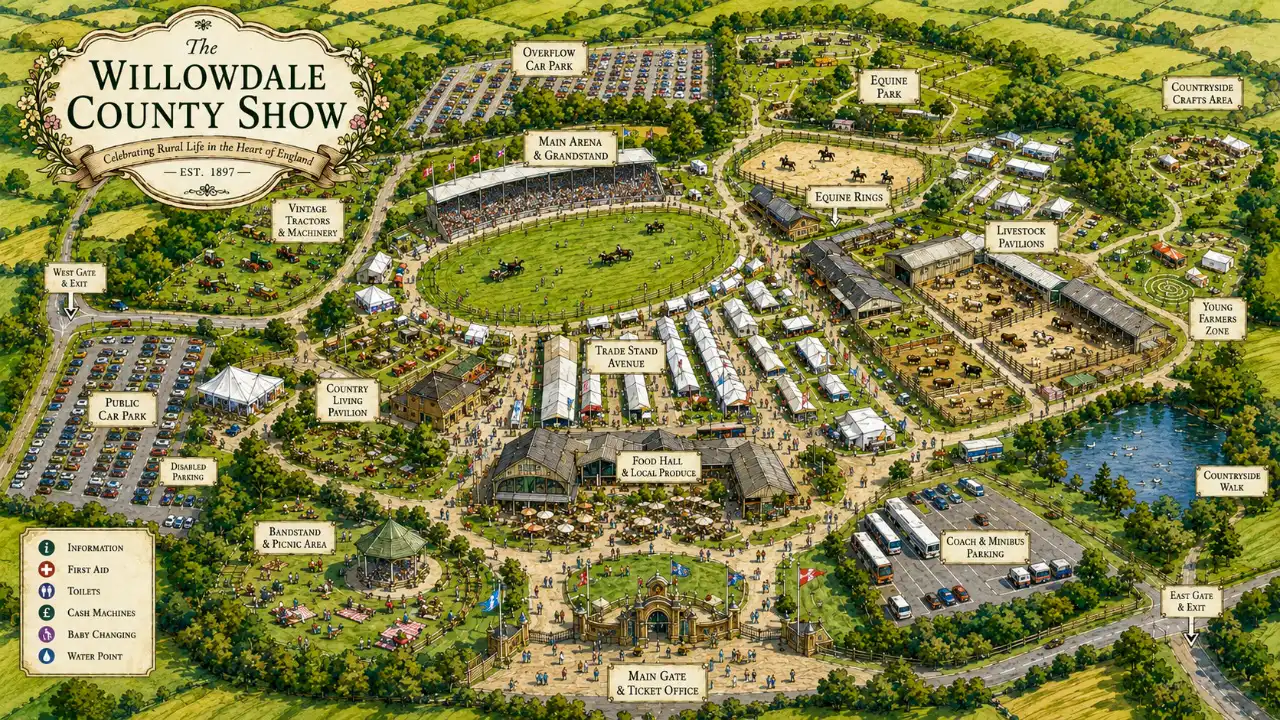
At this scale the show is a small town for a weekend: a six-figure gate across multiple days, hundreds of tradestands and exhibitors, arenas running in parallel, and a visitor who physically cannot see everything — so the ones who plan, spend. You've either commissioned an app already or you're being pitched one, and you know where they disappoint: the map goes blank the moment a hundred thousand phones hit a rural mast, the tradestand directory never fills, the schedule is held back to protect programme sales, and every year brings another maintenance invoice. The app was never the hard part — offline reliability and content machinery are, and they're what a platform does that a one-off build doesn't.
Offline-first at flagship scale: tens of thousands of phones on a rural mast is the exact condition the platform is designed for.
Your show's identity on the guide, with integrations scoped to your systems — our machinery underneath.
Directory machinery built for hundreds of tradestands and exhibitors: every stand self-manages its own listing, searchable and mapped, without your team chasing a single entry.
Continuously maintained for every show at once: when the platform improves, your show improves — no retainer, no re-quotes, no dependency on one agency.
Multi-day, multi-arena schedules visitors can actually plan around — full programme depth, searchable, with reminders — because at this scale the visitor who plans their day is the visitor who spends.
Go deeper: how the showground map builder works — satellite tracing, automatic illustration, and a map visitors can use offline.
Build costs, annual maintenance, offline reliability and content — laid out honestly, side by side.
Building your own show app vs ShowDayGuide →Your team, one operations surface
Role-based access for a real events team: the site team runs the map, the schedule team imports the programme, the commercial team manages hundreds of tradestand and sponsor listings — all in one dashboard with a single readiness view. The operations tooling is part of the platform, not another build project.
The numbers headline renewals are built on
Counted visitor activity across the guide — reach, engagement, listing performance — surfaced to your team and, in their own dashboards, to your commercial partners. Proof of reach at flagship scale is what headline sponsorship and Principal Partner conversations are built on.
Model it at your scale
The calculator starts at a flagship-scale show. Flagship licences are quoted, so it shows your partner side on its own — put in your own trade-stand, sponsor and advertiser figures.
Flagship licences are quoted
The biggest events in the calendar don't fit a price card, so the flagship licence is quoted for your show. The product is the same one every show gets — everything below is included as standard.
Every band and every partner fee, side by side: the full price table →
Frequently asked questions
We already have an app — why change?
If it works offline on show day, stays full of vendor content, and carries a full schedule, keep it. If any of those is a known weakness — and across the category, they usually are — the comparison is worth an hour: a platform removes the build and maintenance costs while fixing exactly those failure points. Moving is a content exercise, not a rebuild.
Can the guide carry our show's branding?
Yes — every show guide carries the show's own identity, with the platform underneath. At flagship scale, integrations with your existing systems are scoped with you as part of setup.
How does this compare with commissioning an app of our own?
A bespoke build buys total control at five-figure cost, months of lead time, and a permanent annual maintenance commitment. The platform delivers the visitor experience — including the offline reliability most commissioned apps lack — immediately, and is maintained continuously for every show on it. We've published the honest comparison in full.
What proof is there behind the analytics?
The platform's analytics are counted from real visitor activity in the guide — page views, map usage, listing engagement — and surfaced to organisers and commercial partners alike, so sponsorship and advertising are sold on evidence rather than estimates. At flagship scale that evidence is what headline sponsorship renewals are built on.
Does it work alongside the entries system we already use?
Yes. ShowDayGuide is the visitor side of your show — the map, the live schedule, announcements and your partners' pages — and it runs alongside whatever you use for entries and results today.